
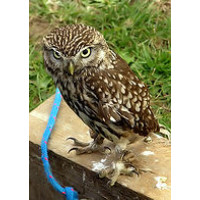
This small owl was introduced to the UK in the 19th century. It can often be seen in the daylight, and if it is alarmed it will bob its head up and down.
Found in England and Wales with a few in southern Scotland. It is most common in central, southern and south eastern England, and the Welsh borders. The Little Owl is a territorial bird found in open country such as mixed farmland and parkland. Its diet is mainly small mammals and birds, large invertebrates (e.g. beetles, crickets, worms).
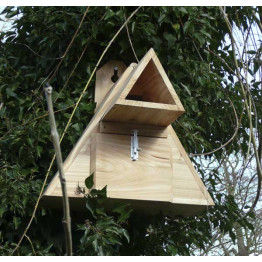
It usually nests in holes in trees or rocks, but will also nest in buildings, both abandoned and those fitted with custom owl nest boxes. If living in an area with a large amount of human activity, Little Owls may grow used to man and will remain on their perch, often in full view, while humans are around.
Egg Weight
15.6g
Maximum Recorded Age
10 years, 2 months
Typical lifespan
3 years
Age at First Breeding
1 year
First clutches laid
Late April
Number of broods
1
Fledging
37-40 days
Incubation
29-21 days
Clutch Size
3-4 eggs
Number in Britain
17,500
Egg Size
34x29 mm
First Record
Introduced Kent 1879
Habitat
Farmland, towns, open woodland
Weight
180g
Wingspan
56cm
Length
22cm
Status in UK
Introduced Breeder
Conservation Status UK
unlisted
£169.95