
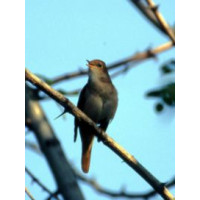
Nightingales are similar to, (but slightly larger than) Robins, with a robust, broad-tailed, rather plain brown appearance. They are a shy bird, and are more common in southern Europe. In the UK they are found in the South.
Their diet consists of Insects, beetles and ants, also berries in autumn. The famous song is indeed of high quality, with a fast succession of high, low and rich notes that few other species can match.
A secretive bird, who likes nothing better than hiding in the middle of an impenetrable bush. It is plain brown above except for the reddish tail. It is buff to white below. Nightingales are so named because they frequently sing at night as well as during the day. The Nightingale is very closely related to the Thrush Nightingale, and they are difficult to tell apart, the latter having a grey toned (rather than brown) back, and less red tail.
Status in UK
Migrant Breeder, Passage Visitor
Maximum Recorded Age
7 years, 1 month
Typical lifespan
3 years
Age at First Breeding
1 year
First clutches laid
Early to mid May
Number of broods
1 or 2
Fledging
11-13 days
Number in Britain
16,000
Conservation Status UK
Amber
Incubation
14-18 days
Length
16cm
Wingspan
24cm
Weight
21g
Habitat
Thickets, damp undergrowth, and woodland
First Record
7th Century
Egg Size
21x16 mm
Egg Weight
2.7g
Clutch Size
4-5 eggs
£20.24