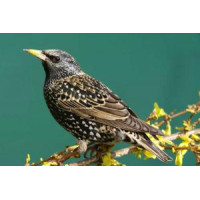
Starlings are small to medium-sized passerine birds. They occur naturally, from Europe, Asia and Africa, to northern Australia and the islands of the tropical Pacific.
Starlings have strong feet, their flight is strong and direct. Their preferred habitat is fairly open country, and they eat insects and fruit.
Starlings do live around human habitation, and are effectively omnivores. Living off, mostly insects (especally crane-fly larvae), fruit and seeds, mostly on ground, often near cattle Plumage is typically dark with a metallic sheen. Most species nest in holes, laying blue eggs.
Noisy and gregarious, starlings spend a lot of the year in flocks. Still one of the commonest of garden birds, its decline elsewhere makes it a Red List species.
Fledging
19-22 days
Incubation
12-15 days
Clutch Size
4-5 eggs
Egg Weight
7.0 g
Egg Size
30x21 mm
Habitat
Farmland, woodland, towns
Weight
78 g
Wingspan
40 cm
Length
22 cm
Status in UK
Resident Breeder, Passage/Winter Visitor
Conservation Status UK
Red
Number in Britain
9.5 million
Number of broods
1 or 2
First clutches laid
Mid April
Age at First Breeding
2 year
Typical Lifespan
5 years
£19.00
£13.95
£13.95
£20.50
£13.20
£55.96 £93.16
£57.72 £63.50
£20.24
£20.24
£61.99 £90.43
£39.95
£19.67