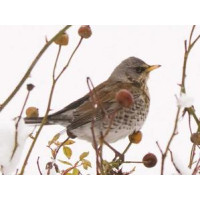
The Fieldfare is a member of the thrush family. It is 22-27 cm long, with a plain brown back, white under wings, and grey rump and rear of its head. The breast has a reddish wash, and the rest of the under parts are White. The breast and flanks are heavily spotted. Both male and female appear similar.
The fieldfare is skilful in defending its nest against egg-thieves and will often bombard its attackers with faeces; this behaviour also gives smaller birds the opportunity for some extra security, so they will make their nest close to that of the Fieldfare. They are large, colourful thrushes, similar to a Mistle thrush in general size, shape and behaviour. They stand very upright and move forward with purposeful hops.
The best places to see them are in the countryside, along hedges and in fields. Fieldfares are omnivorous, and eat a large selection of insects and grubs, as well as berries in the winter. Hawthorn hedges with berries are a particular favourite. A rare breeder in this country, if you are lucky you may get one in your garden in severe winters when snow covers the countryside. Fieldfares are migratory birds, and begin to arrive during October and numbers build up as the winter progresses. Birds start to return to breed in woodland and scrub in northern Europe and Asia, during March. the latest time to see them in this country is May.
The male has a simple chattering song, and a chattering flight and alarm call.
Egg Weight
6.8 g
Maximum Recorded Age
11 years, 9 months
Typical Lifespan
3 years
Age at First Breeding
1 year
First clutches laid
Late March
Number of broods
1 or 2
Fledging
12 - 16 days
Incubation
11- 14 days
Clutch Size
5-6 eggs
Number in Britain
320 thousand (winter)
Egg Size
29x21 mm
First Record
11th Century
Habitat
Forest, woodland, towns
Weight
100g
Wingspan
40cm
Length
26 cm
Status in UK
Scarce Breeder, Passage/Winter Visitor
Conservation Status UK
Amber
£16.99
£20.24
£20.50
£22.36
£22.36
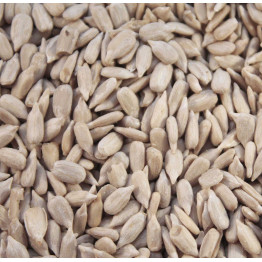
£17.09
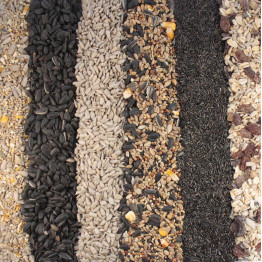
£55.96 £93.16
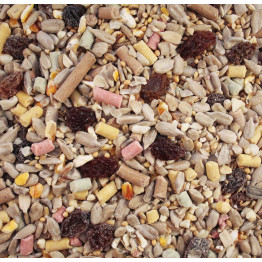
£20.24
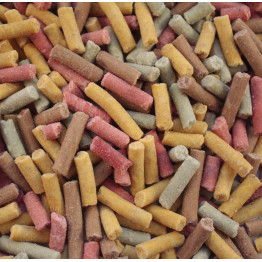
£22.36
£20.24
£20.24
£27.95
£24.99
£9.99
£17.84
£22.36